

Turning Observation into Strategic Action in Real Time
Introduction: From Static Auditing to Dynamic Insight
Internal audit has traditionally been a retrospective function. Reports are prepared, findings delivered, and recommendations tabled — often weeks or months after the underlying events. In an increasingly fast-moving, complex organizational landscape, this reactive approach limits audit’s relevance.
Enter the OODA Loop — Observe, Orient, Decide, Act — a framework originally developed in military strategy but highly applicable to modern internal audit. The OODA Loop emphasizes agility, situational awareness, and rapid response. It offers a way for auditors to not only detect risks but also to influence outcomes proactively, positioning audit as a strategic partner rather than a historical recorder.
Dynamic auditing, guided by the OODA Loop, moves beyond checklists and compliance metrics. It allows audit to sense emerging threats, anticipate behavioral responses, and shape decision-making before risks crystallize into losses.
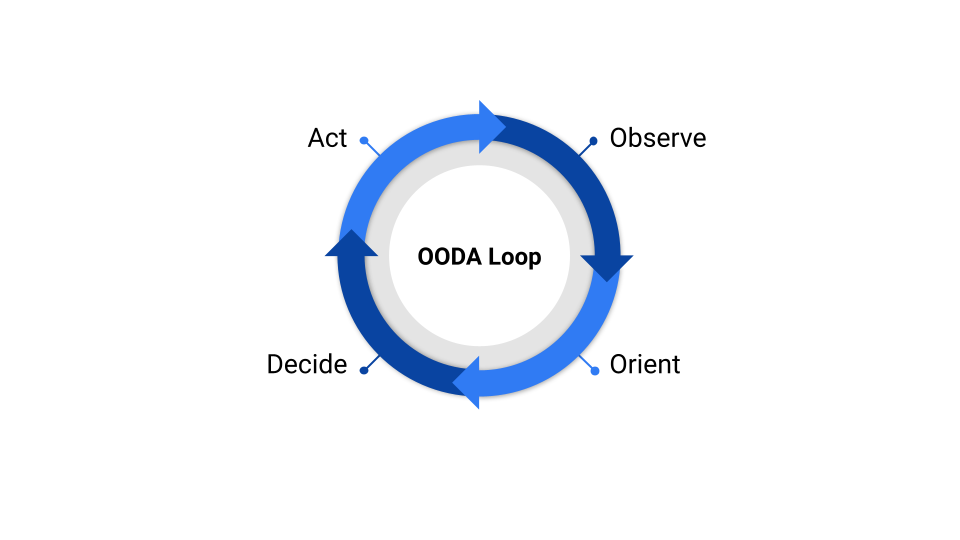
Observing Beyond the Obvious
Observation is the foundation of the loop. Traditional audits focus on pre-defined controls, historical transactions, and static documentation. Dynamic auditing, by contrast, prioritizes real-time sensing.
Key aspects include:
- Behavioral Observation – tracking recurring patterns, informal workarounds, and subtle deviations from policy.
- Environmental Scanning – monitoring external signals such as regulatory shifts, market trends, or competitor activity that may create operational stress.
- Information Integration – combining quantitative data with qualitative insights from process owners, frontline staff, and executive interactions.
Observation in this context is continuous and deliberate, not episodic. Auditors must cultivate curiosity, resist confirmation bias, and look beyond what is reported to understand how work actually happens.
Orienting: Context Is Everything
Observation without context is noise. Orientation is about making sense of what has been observed — situating findings within the organizational ecosystem, strategic priorities, and risk landscape.
Auditors must consider:
- Patterns Across Time and Space – a single minor exception may seem immaterial, but repeated occurrences across departments or cycles often indicate structural weaknesses.
- Cultural and Incentive Dynamics – why are processes bypassed? Which behaviors are reinforced by targets, norms, or performance pressures?
- Strategic Alignment – how do observed risks intersect with organizational objectives, regulatory expectations, and stakeholder priorities?
Orientation transforms data into insight. It is the step where audit moves from recording anomalies to interpreting implications, providing a lens for decision-makers to see what matters most.
Deciding: From Insight to Choice
Armed with context, auditors enter the decision phase. The goal is not simply to produce recommendations, but to determine how and when to influence change effectively.
Effective decision-making in dynamic auditing involves:
- Prioritizing impact over volume – not every deviation requires escalation. Focus on issues that materially affect strategic outcomes.
- Identifying intervention points – where can audit insight alter behavior, reduce risk, or strengthen controls?
- Anticipating response scenarios – understanding how management, boards, and stakeholders are likely to react ensures recommendations are realistic and actionable.
This phase is where audit begins to bridge the gap between technical assessment and strategic influence, crafting interventions that are compelling and implementable.
Acting: Timely and Targeted Intervention
Action is the ultimate purpose of auditing. Dynamic audit transforms insight into timely interventions that prevent escalation rather than merely documenting failure after the fact.
Key principles include:
- Rapid Escalation – ensuring critical risks are communicated promptly to the appropriate level of authority.
- Focused Guidance – providing actionable steps rather than abstract directives, tailored to operational realities.
- Monitoring Impact – following up on actions taken to validate effectiveness, adjust recommendations, and refine future interventions.
In practice, this creates a feedback loop, reinforcing observation, orientation, and decision-making — auditors learn in real time, improving both strategy and execution.
The Strategic Advantage of Dynamic Auditing
Organizations that embrace the OODA Loop gain several competitive advantages:
- Early Risk Detection – subtle deviations are spotted before they escalate into systemic failures.
- Enhanced Influence – audit shifts from a compliance observer to a strategic advisor.
- Organizational Agility – leadership decisions are better informed, faster, and more resilient to uncertainty.
- Continuous Learning – the loop creates a culture of feedback, reflection, and adaptive improvement within the audit function.
Dynamic auditing, when executed well, ensures that audit does not merely document what happened, but shapes what happens next.
Conclusion: From Audit to Anticipation
The OODA Loop reframes internal audit as an anticipatory, strategic function. Observation alone does not protect value. Contextual orientation alone does not shift behavior. Decision-making alone does not prevent risk. Only the disciplined integration of observation, orientation, decision, and action transforms insight into impact.
Auditors who master this loop become navigators of complexity, guides for leadership, and architects of organizational resilience. Their value lies not just in knowing what went wrong, but in shaping what goes right — before failure becomes inevitable.
Our Commitment at AfriAudit
AfriAudit is more than a newsletter. It is a continent-wide campaign to elevate internal audit from silence to influence — from compliance to contribution.
We exist to:
- Equip auditors with a modern, courageous audit mindset
- Position audit functions as value drivers, not cost centers
- Build bridges between audit professionals and executive leadership
- Restore trust in institutions through transparency and strategic oversight
We believe that when audit thinks deeply, speaks clearly, and acts bravely — organizations transform.
And Africa wins.
Let’s Build This Together
Are you a fellow auditor, board member, risk leader, or institutional head who believes that reflection is the next frontier of governance?
Comment below:
How does your audit team translate findings into action?
Follow AfriAudit for weekly insights that challenge, sharpen, and inspire.
Subscribe to join the growing network of African audit transformers.
With clarity and commitment,
Titus Wambua
Chief Audit Executive | Governance Advisor | Founder, AfriAudit
Turning internal audit into a boardroom asset — one institution at a time.