
Why Organizations Fail at the Precise Moment They Need Integrity Most
Organizational failure rarely announces itself through scandal, collapsed controls, or strategic missteps. Those are merely symptoms. The true point of failure is far more subtle—and far more dangerous.
It begins with a psychological rupture at the top.
Across boardrooms, executive committees, and governance forums, organizations unravel when leadership’s internal state becomes misaligned with the system it is meant to steward. Specifically:
- When leaders perceive the external environment—regulators, markets, politics, or oversight—as unfair, biased, or hostile
- When emotion quietly displaces governance, and reaction overtakes reflection
- When authority becomes a substitute for judgment, and teams follow power rather than principle
- When the one function designed to remain anchored in objectivity and independence chooses, under pressure, to step away
This is the moment when risk ceases to be technical and becomes existential.
In such moments, internal audit is no longer a function of assurance, controls, or compliance. It is transformed into something far more consequential: A moral stabilizer, a psychological counterweight, and a strategic act of presence.
The controversy that unfolded during the Africa Cup of Nations (AFCON) Final offered Africa—and the global leadership community—a rare, unscripted, real-time illustration of this dynamic. What played out on the pitch was not merely a sporting dispute; it was a compressed case study in leadership psychology, followership risk, governance under emotional strain, and the consequences of choosing to stay—or walk away—when pressure peaks.
This article deliberately reframes that moment—not as football drama, but as a masterclass for CEOs on the true purpose of internal audit, the discipline of courage, and the conditions under which organizations either preserve legitimacy or accelerate their own unraveling.
A Crisis in Real Time: Leadership, Emotion, and the Cost of Walking Away
In the dying moments of the Africa Cup of Nations Final, what appeared on the surface to be a refereeing controversy rapidly evolved into something far more instructive. A single decision—interpreted as unjust—triggered a cascading breakdown in judgment, authority, and institutional restraint.
The sequence unfolded with striking familiarity to anyone who has sat in a boardroom under pressure.
First, a coach, perceiving the decision as unfair and humiliating, responded not through structured challenge but through emotional protest. In a moment where leadership required restraint, he chose defiance—issuing an instruction for his team to walk off the pitch.
Second, the players, bound by loyalty, hierarchy, and emotional contagion, followed. Not because the decision had been objectively resolved as wrong, but because authority had spoken. In that instant, allegiance displaced judgment. Power replaced principle.
Third, the environment—referees, match officials, the roaring crowd, media scrutiny, and governing bodies—responded predictably. Pressure intensified. Stakes escalated. The consequences became no longer symbolic, but structural.
Within minutes, the organization stood on the precipice of:
- Immediate sanctions
- Long-term reputational damage
- Loss of moral legitimacy
- Institutional humiliation on a continental stage
This is the point at which many organizations fail—not because of the original decision, but because of how leadership responds to perceived injustice.
And then, something rare happened.
One figure did not move.
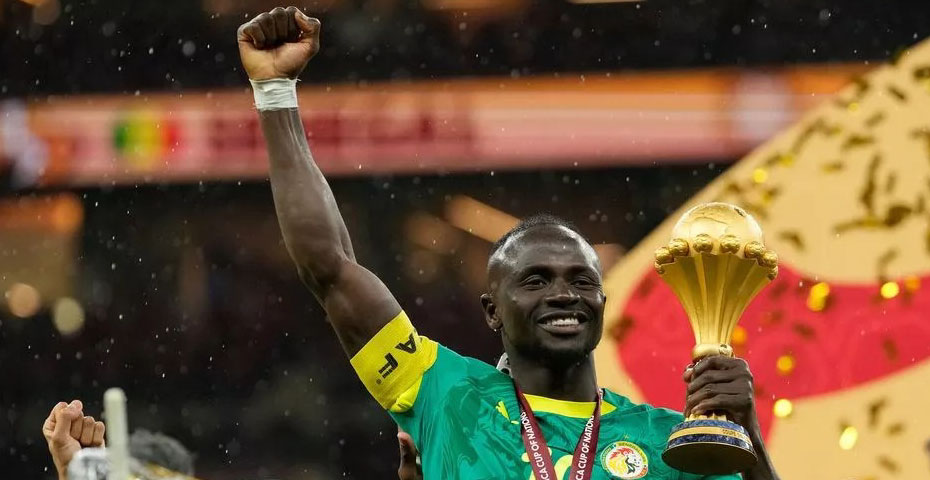
Sadio Mané stayed.
Against the gravitational pull of emotion, against the unspoken demand of tribal loyalty, and against the authority of the coach himself, he remained on the pitch. His choice was neither dramatic nor defiant. It was quiet, disciplined, and profoundly consequential.
By staying, he did not validate the decision.
He did not side with the referee.
He did not betray his team.
He did something far more important – he preserved the organization’s legitimacy.
In that moment, Mané became the psychological anchor of the system—holding space for reason when emotion threatened to collapse governance, and for foresight when short-term protest risked long-term damage.
This moment is not about football.
It is a live case study in internal audit leadership.
Because this is precisely the position internal audit occupies when organizations face pressure:
- When leaders feel wronged by regulators or markets
- When executives demand solidarity over objectivity
- When teams expect loyalty rather than challenge
- When walking away feels easier than standing firm
Like Mané, internal audit must decide whether to follow emotion—or to stay.
Staying is not neutrality.
Staying is not passivity.
Staying is an act of courageous governance.
And in moments like these, the difference between organizational survival and organizational failure is not the fairness of the decision—it is whether someone remains on the pitch when everyone else is preparing to leave.
That someone, in well-governed organizations, is internal audit.
The Central Analogy: Assigning Organizational Roles Under Pressure
What unfolded during the AFCON final was not a collection of individuals reacting independently; it was a system revealing itself under stress. When viewed through a leadership and governance lens, each actor on the pitch maps directly to a familiar organizational role:
- The Coach — The CEO Under Pressure
The coach embodies the CEO at the apex of authority, responsible not only for strategy and performance, but for setting the emotional tone of the organization. When the coach perceived injustice, his response became the organization’s response. This mirrors how CEOs, when feeling unfairly treated by regulators, markets, or public opinion, can unintentionally trigger organizational overreaction—transforming personal grievance into institutional risk. - The Referee — The External Environment
The referee represents the external forces that organizations must operate within: regulators, markets, political systems, and societal expectations. These forces are not designed to be empathetic; they are designed to be impartial. Whether their decisions feel right or wrong, leadership maturity is measured by the ability to continue operating within the system rather than rebelling against it. - The Players — The Executive Team and Employees
The players symbolize executive leadership teams and employees—highly capable, deeply invested, and psychologically wired to follow authority in moments of uncertainty. When leadership reacts emotionally, teams rarely challenge the direction; they comply. This is how collective risk escalates—not through incompetence, but through loyalty without reflection. - The Fans — External Stakeholders
The fans represent customers, citizens, investors, donors, and the broader public. They do not have access to internal context or nuance; they judge organizations by visible actions. In moments of controversy, stakeholder trust can shift rapidly from support to skepticism, magnifying reputational exposure far beyond the original incident. - The Governing Bodies — Boards, Regulators, and Sanctioning Authorities
CAF and FIFA mirror boards, regulators, and oversight institutions. Their mandate is not to arbitrate emotion, but to preserve institutional order. They do not reward protest or defiance; they enforce consequence. Organizations often underestimate this reality—until governance intervenes decisively. - Sadio Mané — Internal Audit
Mané represents internal audit at its highest expression. Without positional authority, without control over outcomes, he remained anchored in foresight, balance, and restraint. By staying on the pitch, he preserved the organization’s legitimacy, mitigated escalation, and protected long-term interests—precisely the role internal audit is designed to play when pressure peaks.
This is where most leadership thinking stops—at mapping roles and responsibilities.
AfriAudit goes further.
We examine how these roles interact psychologically under stress, how power and emotion distort judgment, and why internal audit—when properly positioned and empowered—becomes the stabilizing force that prevents organizations from turning momentary grievance into irreversible damage.
Because in moments of crisis, governance is not about who is right.
It is about who remains steady when the system is at risk of losing itself.
The Psychology of the CEO Under Pressure
When Leaders Feel Wronged by the System
The coach’s reaction in the AFCON final mirrors a psychological pattern that quietly plays out in boardrooms far more often than leaders care to admit. It is the moment when authority collides with perceived injustice—and judgment begins to erode.
Internally, the narrative sounds familiar:
- “The system is unfair.”
- “This decision is biased or politically motivated.”
- “We are being punished despite doing the right thing.”
- “We must take a stand.”
At a psychological level, this is not merely frustration. It is the convergence of ego threat and moral injury. Ego threat emerges when a leader’s competence, reputation, or authority feels undermined. Moral injury arises when leaders believe the system has violated an implicit contract of fairness. Together, they create a potent emotional cocktail—one that narrows perception and accelerates reactive decision-making.
In organizations, this psychological state manifests in highly predictable—and highly risky—ways:
- Regulatory defiance, framed internally as courage or resistance
- Hostility toward auditors and oversight functions, seen as extensions of an unfair system
- Override of controls and processes, justified as “exceptional circumstances”
- Emotion-driven decisions, masked as decisive leadership
- A subtle but dangerous belief that leadership judgment supersedes rules
This is the most dangerous moment in leadership—not because leaders lack intelligence or intent, but because emotion temporarily displaces governance.
When this happens, organizations do not fail due to weak systems. They fail because the systems are deliberately bypassed.
And at this point, the risk multiplies rapidly.
Why?
Because teams do not follow principles in moments of uncertainty.
They follow power.
Executives, managers, and employees take cues not from policies or values statements, but from what the CEO signals—explicitly or implicitly—about acceptable behavior. When leaders challenge the system emotionally, teams interpret it as permission to suspend judgment, silence dissent, and align loyalty with authority.
This is how a single psychological moment at the top becomes an organizational event.
It is also the precise moment when internal audit’s role shifts—from technical assurance to existential stewardship of the organization’s future.
Followership Risk
Why Teams Walk When Leaders Walk
The players did not walk off the pitch because they independently assessed the situation and reached a reasoned conclusion. They walked because the psychological contract of leadership had been activated.
Three forces converged in that moment:
- Loyalty eclipsed judgment. In high-pressure environments, allegiance to authority feels safer than independent thinking. Following the leader preserves belonging—even when it compromises objectivity.
- Emotional contagion accelerated behavior. Emotion spreads faster than reason, especially when modeled by those at the top. What begins as individual frustration quickly becomes collective action.
- Authority displaced governance. Formal rules, procedures, and institutional safeguards were temporarily overridden by a single directive from power.
This dynamic is neither unusual nor malicious. It is deeply human.
In organizations, the same pattern explains how rational, capable professionals participate in outcomes they might privately question:
- Entire leadership teams come to justify misconduct as contextual, necessary, or exceptional
- Cultures gradually normalize ethical drift, not through dramatic breaches, but through small, repeated compromises
- Silence replaces challenge, as dissent becomes emotionally or politically unsafe
- Audit insights are ignored, delayed, or politicized, reframed as obstruction rather than protection
What makes followership risk so dangerous is that it operates invisibly. From the inside, it feels like unity. From the outside, it looks like failure of governance.
This is not a people problem.
It is not about weak character, poor hiring, or insufficient training.
It is a leadership system problem—one where authority is insufficiently balanced by independent challenge, and where psychological safety is conditional rather than structural.
Until organizations confront followership risk as a systemic governance issue, they will continue to mistake loyalty for integrity—and cohesion for control.
And in moments of crisis, that confusion becomes catastrophic.
The Internal Auditor’s Dilemma
Stay or Walk?
This is the moment when Sadio Mané ceases to be a footballer and becomes the internal auditor.
The internal auditor occupies the most psychologically demanding position in the organization—not because of technical complexity, but because of where the role sits when pressure peaks. It is a role defined less by authority and more by judgment; less by power and more by courage.
At the height of crisis, the auditor stands at an uneasy intersection:
- Between CEO emotion and board accountability, where empathy must not dilute independence
- Between team loyalty and stakeholder trust, where belonging must not override objectivity
- Between immediate backlash and long-term survival, where silence today creates catastrophe tomorrow
This intersection is profoundly uncomfortable. It isolates. It invites misinterpretation. And it tests the auditor’s professional identity at its core.
The easiest choice in this moment is to walk.
Walking preserves relationships.
Walking avoids conflict.
Walking feels humane.
But walking also validates dysfunction.
The right choice—the harder, lonelier, and ultimately more consequential choice—is to stay.
To stay is not to oppose leadership, but to hold the organization in balance when leadership is under emotional strain. It is to remain present when pressure demands withdrawal; to anchor reason when emotion dominates; to protect legitimacy when short-term reaction threatens long-term consequence.
Staying requires more than technical competence. It demands:
- Independence of mind
- Emotional regulation
- Ethical clarity
- Strategic foresight
- The courage to withstand isolation
In that moment, internal audit becomes what it was always meant to be—not a watchdog, not an obstacle, but the conscience of the system.
And like Mané on the pitch, the auditor’s most powerful act is not what they say or do—but their refusal to leave when everyone else is preparing to walk away.
What If the Auditor Had Walked?
A Counterfactual Risk Analysis
One of the most powerful tools in executive judgment is counterfactual thinking; asking not what happened, but what would have happened if a different choice had been made. In moments of crisis, this lens exposes risks that are otherwise invisible in the heat of emotion.
Had Sadio Mané—the metaphorical internal auditor—walked off the pitch alongside the coach and players, the immediate act would have carried consequences far beyond symbolic protest.
First, the protest itself would have been institutionally legitimized. What began as an emotional reaction would have been reframed as a collective organizational stance. In governance terms, silence—or absence—would have been interpreted as endorsement.
Second, sanctions would have been inevitable. Governing bodies do not evaluate intent; they assess behavior. A unified walk-off would have left little room for discretion, triggering punitive responses designed to protect the integrity of the system rather than the sentiment of the participants.
Third, the organization would have suffered a profound loss of moral authority. The ability to claim unfair treatment evaporates the moment an organization abandons the rules it expects others to respect. Protest replaces principle; grievance replaces legitimacy.
Fourth, stakeholders would have turned hostile. Fans—like customers, citizens, and investors—rarely side with organizations that appear to place emotion above responsibility. Support would have fragmented, narratives would have hardened, and reputational damage would have accelerated.
Finally, the long-term consequences would have dwarfed the short-term emotional relief. What felt cathartic in the moment would have metastasized into structural damage—difficult to reverse, expensive to repair, and enduring in public memory.
Translated into corporate reality, the risk profile is unmistakable:
- Regulatory penalties imposed not for the original issue, but for the response to it
- Board intervention, as oversight bodies move to contain reputational and fiduciary exposure
- Executive dismissals, framed as accountability but driven by loss of confidence
- Brand erosion, as trust decays faster than performance metrics can recover
- Loss of public and stakeholder trust, the most difficult asset to rebuild once forfeited
In this counterfactual scenario, the most damaging factor is not the initial controversy—but the absence of internal audit at the moment it mattered most.
By walking away, internal audit would have done more than disengage.
It would have validated dysfunction, normalized emotional governance, and signaled that independence is conditional rather than principled.
Staying, therefore, was not symbolic.
It was risk mitigation at the highest level.
Because in moments of crisis, the presence or absence of internal audit does not merely influence outcomes—it defines them.
The True Role of Internal Audit in Crisis
Beyond Assurance: The Ethics of Presence
Internal audit is often misunderstood. Too many still see it as:
- A compliance function, enforcing rules only when convenient
- A policing unit, watching for missteps rather than guiding judgment
- A technical reviewer, producing reports without influence
These roles are transactional. They maintain process—but they do not preserve the organization when it is under existential stress.
The true role of internal audit is far more profound. In moments of crisis, internal audit becomes:
- The psychological stabilizer of the organization—anchoring reason when emotions threaten to override judgment
- The last line of principled presence—remaining steadfast when leadership wavers
- The guardian of long-term legitimacy—protecting trust, reputation, and stakeholder confidence when every instinct says to retreat
Executing this role demands mastery across multiple dimensions:
- Independence—unshakable adherence to principles, free from personal or political bias
- Objectivity—assessing situations without letting emotion or hierarchy distort judgment
- Courage—standing firm in the face of pressure, criticism, or isolation
- Emotional intelligence—navigating complex human dynamics with calm and clarity
- Ethical reasoning—making decisions aligned with values, not convenience
- Stakeholder foresight—anticipating reactions, consequences, and systemic risk
Standards call this independence. Leadership psychology calls it moral courage.
At AfriAudit, we call it: “staying on the pitch.”
Because in every organization, there comes a moment when rules, reports, and processes are insufficient.
At that moment, internal audit is not just a function—it is the conscience, the anchor, and the protector of the enterprise.
The ARC™ Perspective
Audit as Relational Capital
Crisis exposes the gaps between authority, influence, and integrity. To navigate these moments, internal audit must operate not only with skill, but with relational intelligence. This is the foundation of the ARC™ Framework™, a proprietary model designed by Titus Wambua, which positions internal audit as the strategic partner of the CEO.
The ARC™ Framework is built on three intersecting principles:
The ARC™ Perspective
Audit as Relational Capital
Crisis reveals the true value of internal audit—not as a technical function, but as a strategic, relational, and systemic force. This is the foundation of the ARC™ Framework™, a proprietary model designed by Titus Wambua, which equips auditors to operate as trusted partners to the CEO while safeguarding organizational legitimacy.
ARC™ stands for: Alignment, Resonance, and Coherence—three intersecting dimensions that ensure audit is not just present, but decisive, credible, and transformative.
The AFCON final provides a powerful lens to understand the strategic role of internal audit under pressure. Titus Wambua’s ARC™ Framework™—Alignment, Resonance, and Coherence—captures the principles that enable auditors to anchor organizations, influence leadership, and preserve legitimacy when crises strike.
- Alignment — Cognitive Intelligence
Alignment ensures that the auditor and CEO operate from shared understanding and strategic coherence. Just as Mané understood the flow of the game and his role within the team, the auditor must interpret signals correctly, anticipate risks, and act in concert with leadership. Alignment prevents missteps, reduces ambiguity, and maintains organizational focus under pressure. - Resonance — Emotional Intelligence
Resonance allows audit to influence outcomes by building trust, reading organizational dynamics, and navigating emotions. Mané’s calm and steadfast presence amidst chaos mirrors how auditors must penetrate emotional currents, reinforce confidence, and act as the stabilizing force when leadership wavers. - Coherence — Systemic Intelligence
Coherence translates insight into actionable transformation, ensuring audit guidance strengthens governance, mitigates risk, and drives long-term value. Like Mané maintaining structure on the pitch, auditors convert knowledge and judgment into sustainable organizational outcomes rather than reactive measures.
Mané had relational capital—he stayed when others walked, balancing foresight, courage, and influence.
Internal audit, guided by the ARC™ Framework™, must do the same: Stay on the pitch, build alignment, foster resonance, and ensure coherence—protecting the organization when pressure peaks and safeguarding its future.
Mané Precedent: ARC in Action
Sadio Mané remained on the pitch when every other actor walked away. His presence embodied the three pillars of ARC™ before they were formally codified:
- Alignment: He understood the goals of the “organization” on the field and his role within it.
- Resonance: He maintained trust, balance, and moral courage amid emotional turmoil.
- Coherence: His actions preserved the integrity of the system, mitigating immediate and long-term fallout.
Internal audit, guided by ARC™, must do the same. Like Mané, auditors anchor the organization, influence through relational intelligence, and ensure that principles outlast pressure.
Mané had relational capital. Internal audit must have it too.
Stay on the pitch. Build ARC™. Lead with presence. Preserve legitimacy.
In the AFCON final, Sadio Mané exemplified relational capital in action. Against emotional pressure, authority conflicts, and external scrutiny, he remained on the pitch—anchoring reason, stability, and foresight. His presence was not about control, but about ensuring the system could function effectively under stress.
Internal audit must do the same. Guided by the ARC™ Framework™, it builds Alignment, nurtures Resonance, and preserves Coherence, ensuring that when organizations face turbulence, they do not collapse under the weight of emotion or misjudgment.
Mané had relational capital.
Internal audit must have it too.
Stay on the pitch. Build ARC™. Protect organizational legitimacy. Lead with presence.
Implications For CEOs
What This Means for Your Organization
CEOs must ask:
- Have we positioned audit as a strategic partner—or a nuisance?
- Do we listen to audit only when convenient?
- Have we empowered audit to stand firm against us?
- Have we rehearsed ethical crisis scenarios?
- Do we reward courage—or compliance?
The way you treat audit before crisis determines whether it saves you during crisis.
Way Forward
Guiding Questions for CEOs and Boards
- If my organization faced public controversy today, would audit stay?
- Does my audit leader have psychological safety to challenge me?
- Have I confused loyalty with integrity?
- Is audit independent in structure—or only on paper?
- Do we see audit as risk mitigator or leadership conscience?
Our Commitment at AfriAudit
AfriAudit is more than a newsletter. It’s a continent-wide campaign to elevate internal audit from silence to influence — from compliance to contribution.
We exist to:
- Equip auditors with a modern, courageous audit mindset
- Position audit functions as value drivers, not cost centers
- Build bridges between audit professionals and executive leadership
- Restore trust in institutions through transparency and strategic oversight
We believe that when audit thinks deeply, speaks clearly, and acts bravely — organizations transform.
And Africa wins.
Let’s Build This Together
Are you a fellow auditor, board member, risk leader, or institutional head who believes that reflection is the next frontier of governance?
- Comment below: What’s one audit insight that would have mattered more if it came earlier?
- Follow AfriAudit for weekly insights that challenge, sharpen, and inspire.
- Subscribe to join the growing network of African audit transformers.
With clarity and commitment,
Titus Wambua
Chief Audit Executive | Governance Advisor | Founder, AfriAudit
Turning internal audit into a boardroom asset — one institution at a time.







Comments
Hi, this is a comment.
To get started with moderating, editing, and deleting comments, please visit the Comments screen in the dashboard.
Commenter avatars come from Gravatar.